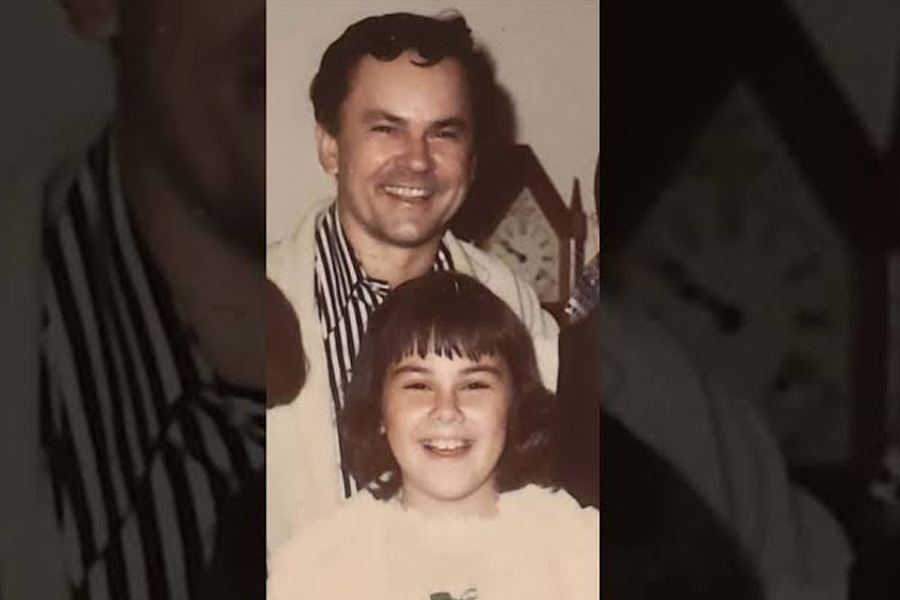
Karen Leslie Crane is best known as the daughter of actor, percussionist, and radio personality Bob Crane, who played Colonel Robert Hogan on CBS’s Hogan’s Heroes. However, her narrative goes beyond her father’s renown. It explores childhood, divorce, family breakdowns, sudden loss, privacy, and an unsolved murder.
Karen’s story is interesting because Bob Crane was her father, not a TV star. Colonel Hogan concealed a difficult family life that changed drastically after her parents split in 1970. Karen was 17 when her father was murdered in Scottsdale, Arizona, eight years later.
This murder remains one of Hollywood’s mysteries. It was never a mystery to Karen and her siblings. A personal wound remained open as the public analyzed suspects, evidence, and ideas.
Who Was Karen Leslie Crane
Karen Leslie Crane was born around 1961, the youngest of Bob Crane and Anne Terzian’s three children. She grew up in Southern California after the family moved west during Bob Crane’s rise as a radio personality at KNX.
Her childhood unfolded during the years when her father became increasingly famous. Bob Crane was already a successful radio personality before Hogan’s Heroes made him a nationally recognized television actor in 1965.
For Karen, however, celebrity was simply part of the scenery of family life.
She attended Taft High School in Woodland Hills, California, and graduated in June 1978. Her graduation was particularly meaningful because Bob Crane canceled a performance so he could attend the ceremony. Only days later, his life would end violently.
Karen had developed an interest in acting herself and was preparing to pursue work in the entertainment industry. She reportedly had an agent and was receiving training. Her father’s death disrupted those ambitions and became a dividing line in her life.
The girl who had been preparing for an acting career suddenly had to confront a loss that would become public property.
Bob Crane and Anne Terzian
Bob Crane and Anne Terzian were high-school sweethearts. They married in 1949 and eventually had three children.
Their marriage lasted more than two decades, but the relationship ended in divorce in 1970. The divorce became an important part of the family’s later history because Bob Crane remarried that same year.
Anne subsequently married real-estate broker Chuck Sloan in 1973. She maintained a comparatively private existence, concentrating much of her life on family rather than celebrity.
Anne died in September 2025 at the age of 94.
For Karen, her mother’s role was particularly important during the upheaval surrounding Bob Crane’s death. The family had already been reshaped by divorce, and the murder created another permanent fracture.
The Crane Children
Karen was one of three children from Bob Crane’s first marriage.
| Family member | Relationship to Bob Crane | Publicly known details |
|---|---|---|
| Robert David Crane | Older brother | Journalist, writer, and author who has extensively discussed his father’s life and murder |
| Deborah Ann Crane | Older sister | Has largely remained outside the public spotlight |
| Karen Leslie Crane | Younger daughter | Former aspiring actress who later worked with antiques and began writing an autobiography |
| Robert Scott Crane | Half-brother | Son of Bob Crane and Sigrid Valdis |
| Ana Marie Crane | Half-sister | Adopted daughter of Bob Crane and Sigrid Valdis |
The first three children belonged to Bob Crane’s marriage with Anne Terzian. His second marriage to actress Sigrid Valdis, whose birth name was Patricia Olson, produced another branch of the family.
The relationships between the two branches were not always easy.
Karen has spoken about the difficulties surrounding her father’s second family, both while he was alive and after his death. The emotional landscape became even more complicated as questions surrounding Bob Crane’s estate, remains, private life, and murder continued for decades.
Robert David Crane and His Father’s Legacy
Robert David Crane became one of the most visible members of the family in discussions about Bob Crane.
He has written about his father and the murder, including the book Crane: Sex, Celebrity, and My Father’s Unsolved Murder. His work has helped preserve details about Bob Crane that might otherwise have disappeared into the passage of time.
Robert’s perspective is also significant because he knew his father privately while watching the public narrative develop after the murder.
Karen has appeared publicly in connection with some of her brother’s work. She and Robert also donated approximately 50 hours of Bob Crane’s KNX radio broadcasts to a television and radio archive, preserving an important part of his career before Hollywood.
Bob Crane’s Second Family
Bob Crane married Sigrid Valdis in 1970, shortly after his divorce from Anne.
Valdis had appeared with him on Hogan’s Heroes, where she played Hilda. Their marriage created a second family that existed alongside the children from his first marriage.
They had a son, Robert Scott “Scotty” Crane, born in 1971, and adopted a daughter, Ana Marie Crane.
The relationship between the two Crane families later became strained. Bob Crane’s death left unresolved questions not only about the murder but also about family relationships and how his children remembered him.
Some accounts have also raised questions about the biological paternity of the children from his second marriage, based on reports that Bob Crane underwent a vasectomy in 1968. These claims have remained part of the family’s complicated public history rather than providing a simple explanation of it.
The Murder That Changed Karen’s Life
In Scottsdale, Arizona, Bob Crane was murdered on June 29, 1978.
He was 49 and performing in Beginner’s Luck at dinner theater. After missing an appointment, he was located in his leased residence.
The crime scene was horrific. An electrical cord was found around Crane’s neck after severe head injuries. No one found the murder weapon.
Investigators quickly valued Crane’s acquaintances because there were no traces of forced entry.
A Crane acquaintance, video equipment merchant John Henry Carpenter, was a key figure in the investigation. Carpenter had been with Crane just before the murder and shared his passion in documenting and videotaping intimate meetings.
Later, Carpenter’s rental car blood evidence was crucial. A shot of brain tissue inside the vehicle also caught investigators’ attention.
Contamination and physical evidence loss plagued the murder inquiry, despite compelling evidence.
The John Henry Carpenter Trial
Carpenter was arrested in 1992 and charged with first-degree murder.
His trial took place in 1994 and lasted approximately eight weeks. Prosecutors presented evidence involving the blood found in Carpenter’s car, the photograph, Carpenter’s relationship with Crane, and the lack of forced entry.
The defense challenged the reliability of the physical evidence and emphasized the many people who could potentially have had motives connected to Crane’s private life.
After approximately two and a half days of deliberation, the jury acquitted Carpenter.
The acquittal did not establish who killed Bob Crane. It established that the prosecution had not proved Carpenter’s guilt beyond a reasonable doubt.
Carpenter died of a heart attack in 1998 at the age of 70.
The murder therefore remains officially unsolved.
Karen’s Life After the Murder
The years following Bob Crane’s death appear to have been difficult for Karen.
In a 1998 interview, approximately 20 years after the murder, she was living in the Ventura area and working for an antique dealer. She was also still described as an actress.
Her early acting ambitions had never disappeared entirely, but the murder had interrupted the direction she once imagined for herself.
What stands out to me is how different Karen’s public profile became from her father’s. Bob Crane lived much of his adult life under bright lights, first on radio and then on television. Karen moved in the opposite direction, maintaining considerable privacy.
Her public appearances have been occasional rather than constant.
Karen’s Autobiography
One of the most significant developments in Karen’s later life has been her decision to write about her experiences.
By September 2025, she had reportedly been working on an autobiography for approximately a decade. What began as a collection of lighter family memories gradually developed into something more emotionally searching.
The book examines her childhood, her parents’ divorce, her father’s complicated private life, the murder, and the years that followed.
She was reportedly only one chapter away from finishing it in 2025.
That detail gives the project an almost symbolic quality. For decades, other people have told the story of Bob Crane through books, films, news reports, court proceedings, and speculation. Karen’s autobiography offers the possibility of a different perspective, one centered not on the celebrity or the crime but on the daughter who lived through both.
The Family’s Lasting Connection to Bob Crane
The Cranes’ memories of Bob seem contradictory.
A famous actor, his private life became a big public narrative following his death. He attended his daughter’s high school graduation and shared everyday family activities with his kids.
This version can coexist with another.
Karen and her siblings experience comedy, family activities, and devotion alongside the anguish of their parents’ divorce, Bob Crane’s relationships, confusing private interests, and brutal death.
comprehending the family requires comprehending that conflict.
Bob Crane’s murder became increasingly linked to his public image. However, Karen’s anecdote reminds me that a dramatic case’s suspect was someone’s father.
Where the Family Stands Today
The Crane family remains connected to Bob Crane’s legacy nearly five decades after his death.
Robert David Crane has continued to discuss his father publicly and investigate aspects of the murder. Karen has maintained a quieter presence while working on her autobiography. Deborah has remained largely private.
The second family, including Scotty Crane and Ana Marie Crane, represents another part of Bob Crane’s legacy, although the relationships between the two branches have not always been harmonious.
Meanwhile, the murder itself remains unresolved.
The passage of time has changed the nature of the mystery. Evidence that might once have been decisive was lost, contaminated, degraded, or never properly preserved. Later DNA testing produced information but did not identify a killer.
For Karen, however, the unanswered question is only one part of a much larger story.
FAQ
Who is Karen Leslie Crane?
Karen Leslie Crane is the younger daughter of actor and radio personality Bob Crane and his first wife, Anne Terzian. She was born around 1961 and was 17 when her father was murdered in 1978.
How many children did Bob Crane and Anne Terzian have?
Bob Crane and Anne Terzian had three children: Robert David Crane, Deborah Ann Crane, and Karen Leslie Crane.
What happened to Karen Crane’s father?
Bob Crane was murdered on June 29, 1978, in Scottsdale, Arizona. He suffered fatal head injuries in his apartment. His killer was never conclusively identified.
Was anyone charged with Bob Crane’s murder?
Yes. John Henry Carpenter was arrested and charged with first-degree murder in 1992. He was tried in 1994 and acquitted after the jury found the prosecution had not established his guilt beyond a reasonable doubt.
Who was John Henry Carpenter?
John Henry Carpenter was a video equipment salesman and acquaintance of Bob Crane. He shared Crane’s interest in recording intimate encounters and became the principal suspect in the murder investigation.
Did Karen Crane become an actress?
Karen had an interest in acting and was preparing for an acting career in the late 1970s. After her father’s murder, those plans were disrupted. She was still described as an actress when interviewed in 1998.
What did Karen Crane do for a living?
Public information about her adult career is limited. In 1998, she was working for an antique dealer in the Ventura, California, area.
Is Karen Crane writing a book?
Yes. By September 2025, she had reportedly been working on an autobiography for around 10 years. The project developed into a deeper account of her family, her parents’ divorce, her father’s private life, and the aftermath of his murder.
Who was Anne Terzian?
Anne Terzian was Bob Crane’s first wife and the mother of his three children from that marriage. They married in 1949 and divorced in 1970. She later married Chuck Sloan and remained largely out of the public spotlight. She died in September 2025 at age 94.
Who are Bob Crane’s other children?
From his second marriage to Sigrid Valdis, Bob Crane had Robert Scott “Scotty” Crane and adopted Ana Marie Crane.
Is Bob Crane’s murder still unsolved?
Yes. Although John Henry Carpenter was tried and acquitted, no person has been convicted of Bob Crane’s murder. Later forensic testing did not produce a result that resolved the case.
What happened to Bob Crane’s career before his death?
Crane became a prominent Los Angeles radio personality before achieving national fame as Colonel Robert Hogan on Hogan’s Heroes, which ran from 1965 to 1971. He continued working in entertainment after the sitcom ended.
Why is Karen Leslie Crane’s story significant?
Karen’s story provides a family perspective on a case often dominated by celebrity, scandal, and forensic speculation. She experienced her father’s fame, her parents’ divorce, his murder, and the decades of public attention that followed while largely maintaining her own privacy.
Available next action: Create a downloadable DOCX file here in this chat containing the editable prose above