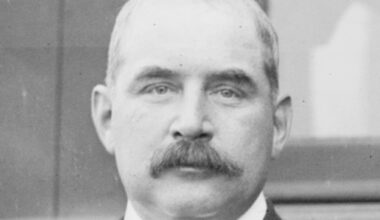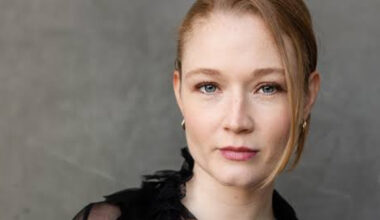
Isiah Cornelius Rolle, also commonly written as Isaiah Cornelius Rolle, lived a life far removed from the spotlight that surrounded some members of his family. Born on September 6, 1922, and passing away on September 12, 2000, he belonged to a large Bahamian American family whose story was deeply connected to Pompano Beach, Florida. His older sister Esther Rolle later became a celebrated actress, best known for her performances as Florida Evans on Maude and Good Times, but Isiah followed a much quieter path.
When I look at Isiah’s story, the most striking detail is not a famous career or a public achievement. It is the family around him. He grew up in a household of 18 children, the son of Bahamian immigrants who built their lives through farming, faith, family, and community. His story offers a small but revealing window into the Bahamian American experience in South Florida during the first half of the twentieth century.
Basic Information
| Detail | Information |
|---|---|
| Full name | Isiah Cornelius Rolle |
| Alternate spelling | Isaiah Cornelius Rolle |
| Born | September 6, 1922 |
| Birthplace | Nassau, Bahamas, or Pompano Beach, Florida, depending on the record |
| Parents | Jonathan R. Rolle Sr. and Elizabeth Iris Dames Rolle |
| Family | One of 18 children |
| Sister | Esther Elizabeth Rolle |
| Wife | Ernestine B. Rolle |
| Marriage | Around 1954 |
| Residence | Pompano Beach, Broward County, Florida |
| Died | September 12, 2000 |
| Age at death | 78 |
| Burial | Westview Community Cemetery, Pompano Beach, Florida |
Isiah Cornelius Rolle Grew Up in a Remarkable Family
Isiah was born into a family shaped by migration. His parents, Jonathan R. Rolle Sr. and Elizabeth Iris Dames Rolle, came from the Bahamas and established their household in South Florida.
Jonathan was a farmer, while Elizabeth devoted herself to raising a remarkably large family. The couple had 18 children, with contemporary descriptions generally identifying approximately seven boys and eleven girls. In such a household, family life must have moved at a remarkable pace. Children were surrounded by brothers and sisters, shared responsibilities, and an extended network of relatives.
The family settled in the Pompano Beach area, where Bahamian immigrants were becoming part of the growing agricultural and working communities of South Florida. Farming was not simply a job for families like the Rolles. It was often a foundation for stability, independence, and community life.
The family also had strong religious connections. Jonathan Rolle was associated with the founding of Mount Calvary Baptist Church in Pompano Beach, reflecting the important role churches played among Black Bahamian migrants in Florida.
His Parents Jonathan R. Rolle Sr. and Elizabeth Iris Dames Rolle
Jonathan R. Rolle Sr. was born around 1883 and died in 1953. His background was rooted in the Bahamas, while his adult life became closely associated with Pompano Beach.
As a farmer, Jonathan represented a generation of Bahamian immigrants who brought agricultural knowledge and practical skills to South Florida. The transition from the islands to Florida did not erase the family’s cultural roots. Instead, the Rolle household became part of a larger Bahamian American community.
Elizabeth Iris Dames Rolle was born in Nassau in 1887 and died in 1947. She was remembered primarily through her role as wife and mother. Raising 18 children was itself a monumental undertaking.
Their children carried the family’s story into several different fields. Some remained private, while others entered entertainment and became known beyond South Florida.
Isiah and His Sister Esther Rolle
The family connection that brings Isiah into public attention most often is his relationship with Esther Elizabeth Rolle.
Esther was born in 1920 in Pompano Beach, making her older than Isiah by about two years. She eventually became one of the most recognizable Black actresses of American television during the 1970s and 1980s.
Her portrayal of Florida Evans gave her a lasting place in television history. Yet behind that public career was the same large Rolle family that had shaped Isiah’s childhood.
Isiah appeared in accounts of Esther’s family as one of her surviving brothers. When Esther died in 1998, family members and biographical accounts brought attention to the brothers and sisters who had shared her early life.
The contrast between the siblings is fascinating. Esther stepped onto television screens across America, while Isiah remained largely outside public view. Their different paths illustrate how one family can contain both a highly visible public figure and relatives whose lives are preserved mainly through family records.
The Rolle Siblings and Their Family Network
An exceptionally big family included Isiah. Although family records vary, some siblings are consistently identified with the Rolle family.
Estelle Evans, an actress and older sister, lived from 1906 to 1985. Rosanna Carter, another older sister, was an actress from 1918 to 2016.
Other sister Esther Rolle was an actress, making three sisters in entertainment significant.
Joshua Rolle, Rachael Rolle, Mary Rolle, Zilpha Sawyer, Sarah Jackson, and Robert Edwin Rolle are siblings. Records don’t always list all 18 children, therefore the family tree is disjointed.
This ambiguity is prevalent when rebuilding early 20th-century large households. In census, marriage, burial, and family tree data, names may vary. Isiah appears with Isaiah, Isiah, and Cornelius variants.
Isiah Cornelius Rolle and Ernestine B. Rolle
Around 1954, Isiah married Ernestine B. Rolle. Her first name is also spelled Earnestine in some records.
Ernestine was born on October 30, 1932, in Florida and died on September 4, 2009. The couple’s life together appears to have been centered around Pompano Beach and the surrounding Broward County community.
Unlike Esther Rolle, Isiah and Ernestine did not have a public celebrity profile. Their marriage is therefore documented primarily through vital and family records rather than interviews or newspaper features.
One particularly meaningful detail survives through Isiah’s gravestone. Its inscription refers to his “loving wife children and grandchildren.” This provides important evidence that Isiah was a husband, father, and grandfather.
Some secondary accounts have incorrectly suggested that he had no children, but the cemetery inscription points in another direction. The names of his children and grandchildren are not broadly documented, so much of that part of his family story remains private.
A Private Life in Pompano Beach
Isiah appears to have spent much of his adult life in the Pompano Beach area. His story is therefore closely tied to a place that became important to generations of Bahamian American families.
South Florida attracted Bahamian migrants because of its geographic proximity to the islands and its growing demand for agricultural, construction, railroad, domestic, and maritime labor. Pompano Beach developed within this broader migration story.
For Isiah’s generation, Florida was not simply a destination. It became home.
Families such as the Rolles established churches, farms, neighborhoods, marriages, and multigenerational connections. Their lives formed part of the foundation beneath the more famous story of South Florida’s development.
The Bahamian American Heritage Behind the Rolle Family
The Rolle family’s history reflects a much larger movement of people between the Bahamas and Florida.
Bahamian migration into South Florida had deep roots. During the nineteenth and early twentieth centuries, migrants crossed the relatively short distance between the islands and Florida for work and opportunity. They became involved in agriculture, fishing, construction, railroad work, domestic service, tourism, and other industries.
Coconut Grove became one of the best-known centers of Bahamian settlement in Miami. Key West also attracted substantial Bahamian communities, while migration eventually extended into Palm Beach and Broward counties.
By the time Isiah was born in 1922, Bahamian families had already established generations of community life in Florida.
His parents’ decision to raise their children in Pompano Beach was therefore part of a much larger historical pattern. Their family carried island traditions into a new environment while becoming deeply rooted in Florida.
Isiah’s Connection to the Wider Rolle Legacy
The Rolle name eventually became associated with American entertainment largely because of Esther and her sisters. Yet the family’s legacy cannot be reduced to acting careers.
The family represents migration, agriculture, religion, parenthood, and community building. Isiah’s life sits quietly inside that larger picture.
He did not need a television career to become part of the family’s history. He was a son, brother, husband, father, and grandfather. Those roles rarely generate headlines, but they form the backbone of family history.
His connection to Esther also gives researchers a useful path into the Rolle family’s Bahamian roots. Through the siblings, parents, marriages, and descendants, a much wider story emerges.
The Final Years of Isiah Cornelius Rolle
Isiah died on September 12, 2000, in Pompano Beach at the age of 78. His death came less than two years after Esther Rolle died in November 1998.
He was buried at Westview Community Cemetery in Pompano Beach, where Esther was also laid to rest. Their graves create a physical connection between two siblings whose public lives were dramatically different.
The inscription on Isiah’s memorial is particularly personal. Rather than emphasizing employment, status, or public accomplishments, it remembers him through the people closest to him: his wife, children, and grandchildren.
That small inscription says something powerful about the life of a private person. The public record may be thin, but a family remembers what official biographies often leave out.
Isiah Cornelius Rolle’s Place in Family History
Isiah’s biography is fragmented. Dates, names, family connections, cemetery specifics, and Rolle household references are there, but few anecdotes in his own perspective.
Absence is part of the story.
Not every historical family member is notable. Some stay hidden while siblings, children, and relatives emerge. That quieter generation included Isiah.
He lived like many South Florida Bahamian American families. His Bahamas-born parents moved to Florida. Farmers made a living. Large families created support networks. Church and community bonded them. His children and grandchildren added to the family.
The outcome is a family saga from the Bahamas to Pompano Beach and from the early 1900s to the present.
Frequently Asked Questions About Isiah Cornelius Rolle
Who was Isiah Cornelius Rolle?
Isiah Cornelius Rolle was a private individual born on September 6, 1922. He was a younger brother of actress Esther Rolle and a member of a large Bahamian American family based in Pompano Beach, Florida.
Was Isiah Cornelius Rolle related to Esther Rolle?
Yes. Isiah was Esther Rolle’s younger brother. Both were children of Jonathan R. Rolle Sr. and Elizabeth Iris Dames Rolle.
How many children did Jonathan and Elizabeth Rolle have?
Jonathan R. Rolle Sr. and Elizabeth Iris Dames Rolle had 18 children, according to family accounts and genealogical information.
Who were some of Isiah Rolle’s famous siblings?
Several of Isiah’s sisters were connected with acting. Estelle Evans, Rosanna Carter, and Esther Rolle all pursued careers in entertainment.
Where was Isiah Cornelius Rolle born?
The birthplace is uncertain. Some records identify Nassau, New Providence, Bahamas, while others associate his birth with Pompano Beach, Florida.
Who was Isiah Cornelius Rolle’s wife?
Isiah was married to Ernestine B. Rolle, sometimes spelled Earnestine B. Rolle. Their marriage dates to around 1954.
Did Isiah Cornelius Rolle have children?
Evidence indicates that he did. His gravestone specifically refers to his wife, children, and grandchildren, although detailed public information about their names and lives is limited.
When did Isiah Cornelius Rolle die?
Isiah died on September 12, 2000, in Pompano Beach, Florida. He was 78 years old.
Where is Isiah Cornelius Rolle buried?
He is buried at Westview Community Cemetery in Pompano Beach, Florida, where his sister Esther Rolle was also buried.
What was Isiah Cornelius Rolle’s career?
His specific occupation and employment history are not well documented publicly. Unlike his actress sisters, he lived largely outside the public spotlight.
Why is Isiah Cornelius Rolle remembered today?
He is remembered primarily as a member of the Rolle family and as the younger brother of Esther Rolle. His life also forms part of the broader history of Bahamian American families who established communities in South Florida.