Eva Gardner Bass and the Musical World That Shaped Her
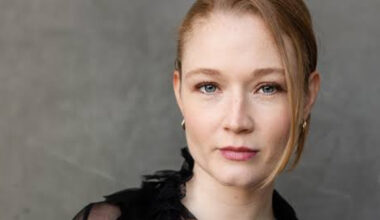
When I look at the career of Eva Gardner Bass, I see a musician who grew up with music not as a distant dream, but as part of the furniture of everyday life. Born on February 17, 1979, in Los Angeles, California, Eva was raised in a household where musicians, performers, restaurant guests, and creative personalities regularly crossed paths. Her childhood unfolded in the Hollywood Hills, surrounded by the sounds and stories of rock and roll.
Eva is the daughter of British bassist Kim Gardner, a respected figure from the 1960s British music scene, and Paula Gardner, a New Orleans born entrepreneur of Lebanese descent. Her family background gave her an unusual cultural mixture. British rock history, Southern American traditions, Lebanese heritage, and Los Angeles music culture all became threads in the fabric of her upbringing.
Kim Gardner was already an accomplished musician before Eva was born. He played with influential groups including The Birds, The Creation, and Ashton, Gardner & Dyke. His career brought him into contact with major figures in popular music, and after moving to Los Angeles in the 1970s, he became deeply connected to the city’s entertainment community.
In 1982, Kim and Paula opened The Cat & Fiddle, a British pub in Hollywood that became far more than a restaurant. For the Gardner family, it was almost another living room. Musicians and entertainers came through its doors, and Eva grew up watching adults work, socialize, perform, and build relationships. She later helped at the pub herself, including working behind the bar.
That environment taught her something that formal music education could not. She learned that music was both art and work. Talent mattered, but so did punctuality, preparation, patience, and the ability to get along with people.
One of the most important moments in Eva’s musical life occurred during her teenage years. Producer and engineer Andy Johns visited the Gardner home and handed a bass to Eva rather than simply directing his attention toward her famous musician father. The gesture helped ignite a serious passion.
Eva had begun playing around the age of 13 or 14. She eventually performed at famous Los Angeles venues such as the Whisky a Go Go and continued developing her craft while studying at the Los Angeles County High School for the Arts. She later graduated cum laude from UCLA with a degree in ethnomusicology.
Her approach to bass reflects that background. Eva has consistently emphasized serving the song, locking into the groove, and supporting the overall musical picture rather than turning the instrument into a display of technical competition. To me, that philosophy explains much of her longevity. A great session or touring bassist is often the musical glue holding everything together.
The Gardner Family and the Legacy of The Cat & Fiddle
The Gardner family story is inseparable from The Cat & Fiddle. Kim and Paula created a place where their daughters could experience both the glamorous and ordinary sides of the entertainment world.
| Family Member | Role and Known Details |
|---|---|
| Kim Gardner | British bassist, songwriter, and musician; Eva’s father |
| Paula Gardner | Entrepreneur, music lover, and longtime Cat & Fiddle family figure |
| Eva Gardner | Bassist, songwriter, session and touring musician |
| Ashlee Gardner | Businesswoman and key figure in the Cat & Fiddle operation |
| Camille Gardner | Eva’s younger twin sister and member of the Gardner family |
On January 27, 1948, in Dulwich, London, Kim Gardner was born. One of British rock’s most vibrant moments shaped his career. The Birds and The Creation brought him close to British rhythm and blues, while Ashton, Gardner & Dike offered him another crucial performance chapter.
After moving to LA, Kim blended music and hospitality. The Cat & Fiddle opened in 1982 and became a popular entertainment industry hangout. The firm also gave Eva and her younger twin sisters a special childhood.
Eva was deeply influenced by Kim. He’s her father and her biggest artistic influence, she says. His basses became family treasures, and his music philosophy carried on after his death.
Kim, 53, died of cancer on October 24, 2001. Eva was starting her career with The Mars Volta, making the timing extra traumatic. His demise shaped her young adulthood emotionally.
After Kim’s death, Paula Gardner became a family pillar. She contributed her entrepreneurial spirit to the family saga, being from New Orleans and Lebanese. She ran the Santa Monica Lily Bleu shoe store and worked in clothes, vintage, and footwear before starting the bar.
Her partnership with Kim was both romantic and practical. Together, they raised three girls and developed a business. The family was not usually divided into parent, child, musician, and company owner. Everyone had duties.
Around 1982, Eva’s younger sisters Ashlee and Camille became twins. Ashlee was instrumental in protecting the family company. She worked closely with The Cat & Fiddle while studying at USC Marshall School of Business.
Ashlee expanded her interests outside hospitality. Paulie Music was her business with her husband, producer, and composer Justin Raisen. Her career continues Gardner’s mix of business and creativity.
Camille has remained more private. Her profession and personal life are less visible, although she stays close to the Gardner family. Growing up in a family pub that was almost like a cultural institution was unusual for the sisters.
The narrative is more striking following Kim’s death. Even after his death, Paula and her daughters continued the family business. Her touring schedule allowed Eva to work at the tavern. Their story shows how a family business may leave memories and responsibilities as well as money.
Eva Gardner’s Rise From Los Angeles Musician to First Call Bassist
Eva’s professional career took a major step forward in 2001 when she became an early member and founding bassist of The Mars Volta. She played on the band’s early material, including the 2002 EP Tremulant. Her involvement with the group came during a period of rapid musical experimentation.
The Mars Volta demanded a different kind of bassist. The music was progressive, unpredictable, rhythmically complicated, and often explosive. Eva’s groove-oriented approach allowed her to contribute without losing the emotional center of the songs.
Her time with the group was interrupted by her father’s death. She left during this difficult period, beginning another chapter that would eventually include extensive touring and session work.
In 2005, Eva toured Australia with Veruca Salt. She later worked with numerous artists and projects, building the reputation that would become central to her career. Her ability to adapt became one of her strongest professional assets.
Then came P!nk.
Eva joined P!nk’s touring band in 2007 and became part of one of the most demanding live environments in modern pop music. Arena touring requires precision on a completely different scale. A musician may perform before tens of thousands of people while working through elaborate production, choreography, travel schedules, rehearsals, and changing arrangements.
Eva handled that world successfully. Her work with P!nk included major tours and appearances, including the 2014 Grammy Awards. She also participated in the Funhouse era and the Beautiful Trauma World Tour, which ran from 2017 into 2019.
Her career expanded beyond P!nk. She has performed or toured with artists including Cher, Gwen Stefani, Tegan & Sara, Moby, Tim Burgess, El Vez, Alice Bag, Marissa Nadler, and Omar Rodríguez-López related projects.
In 2014, Eva reached another significant milestone when she became the first female artist to receive a Fender or Squier signature bass. The instrument was based around a Precision Bass design and included a ship graphic inspired by one of her tattoos.
For a bassist, a signature instrument is more than a commercial arrangement. It represents recognition that a player’s sound, personality, and musical identity have become distinctive enough to inspire an instrument of her own.
Eva has also developed her own songwriting career. Her work includes Chasing Ghosts in 2019, “Love & Drugs” in 2020, and Darkmatter in 2021. These projects reveal another side of an artist who has spent much of her professional life helping other musicians realize their musical visions.
Her return to The Mars Volta in the 2020s added another fascinating chapter. After so many years, returning to music associated with the earliest stage of her career gave fans an opportunity to see an important part of her musical history come full circle.
A Family Story Built on Music, Work, and Resilience
My favorite part of Eva’s family story is that fame wasn’t their only measure of success. Kim was a respected musician and restaurateur. Paula was an entrepreneur who helped create and sustain a cultural gathering place. Ashlee mixed business with music management. Eva worked as a touring and session musician while creating art.
Thus, the family shows several creative industry lifestyles.
Eva’s off-tour lifestyle reflects this groundedness. She likes painting, cooking, yoga, and dog walking. These quieter activities contrast sharply with the intensity of international arena tours.
Women in professional rock music are also highlighted by her public story. Bassists in rock and progressive music are usually men. Eva staked out her place via reliability rather than spectacle. She became the musician artists could trust to arrive prepared, understand the material, hold the groove, and perform under duress.
Touring musicians value that reputation. The singer draws attention, but a network of musicians breathes life into the performance. Eva has occupied that vital space for years.
Through The Cat & Fiddle, the Gardner family has maintained continuity. What began with Kim and Paula in 1982 became an intergenerational family story. For Eva, the bar was a workplace, childhood setting, social classroom, and tie to her father’s world.
That blend of music and regular tasks may be one of the simplest explanations for her career. Eva discovered early that even extraordinary lives have mundane tasks. A musician still has to rehearse. A restaurant must open. A family still has to carry on after bereavement.
Eva Gardner Bass Family and Career Timeline
| Year | Event |
|---|---|
| 1979 | Eva Gardner is born in Los Angeles |
| 1982 | Kim and Paula Gardner open The Cat & Fiddle |
| Around 1993 | Eva begins seriously developing as a bassist |
| Late 1990s | Studies at the Los Angeles County High School for the Arts |
| 2000 | Completes her UCLA studies around this period |
| 2001 | Becomes an early member of The Mars Volta |
| October 24, 2001 | Kim Gardner dies from cancer |
| 2002 | Eva’s playing appears on Tremulant |
| 2005 | Tours Australia with Veruca Salt |
| 2007 | Joins P!nk’s touring band |
| 2011 | Forms the project Telstar |
| 2014 | Receives a signature Fender/Squier Precision Bass |
| 2014 | Performs with P!nk at the Grammy Awards |
| 2016 onward | Expands work with artists including Tegan & Sara and Cher |
| 2019 | Releases Chasing Ghosts |
| 2020 | Releases “Love & Drugs” |
| 2021 | Releases Darkmatter |
| 2022 onward | Returns to The Mars Volta activities |
| 2025 to 2026 | Continues touring, recording, interviews, and professional music work |
Frequently Asked Questions About Eva Gardner Bass and Her Family
Who is Eva Gardner Bass?
Eva Gardner is an American bassist, songwriter, session musician, and touring musician born February 17, 1979, in Los Angeles. She is known for work with The Mars Volta, P!nk, Cher, Gwen Stefani, Tegan & Sara, Moby, and other artists.
Who was Eva Gardner’s father?
Eva’s father was Kim Gardner, a British bassist who became known for his work with groups including The Birds, The Creation, and Ashton, Gardner & Dyke. He later moved to Los Angeles and co-founded The Cat & Fiddle pub with his wife Paula.
When did Kim Gardner die?
Kim Gardner died on October 24, 2001, from cancer. He was 53 years old. His death occurred while Eva was at the beginning of her professional career with The Mars Volta.
Who is Eva Gardner’s mother?
Eva’s mother is Paula Gardner. She was born in New Orleans and has been described as having Lebanese heritage. Paula was an entrepreneur and played a central role in establishing and maintaining The Cat & Fiddle with Kim and later with their daughters.
Does Eva Gardner have siblings?
Yes. Eva has two younger twin sisters, Ashlee Gardner and Camille Gardner. The three sisters grew up around The Cat & Fiddle and shared the unusual experience of being raised within Los Angeles’s music and hospitality culture.
Who is Ashlee Gardner?
Ashlee Gardner is Eva’s younger twin sister. She studied business at USC Marshall School of Business and became heavily involved in the family pub. She has also worked in music management and entrepreneurship and has been associated with Paulie Music with her husband Justin Raisen.
Who is Camille Gardner?
Camille Gardner is Eva’s other younger twin sister. She has maintained a much lower public profile than Eva and Ashlee, so comparatively little information about her professional and personal life is publicly available.
Was Eva Gardner a member of The Mars Volta?
Yes. Eva was an early and founding bassist for The Mars Volta in 2001. She contributed to the group’s early period and played on Tremulant, released in 2002. She later returned to the band’s musical world in the 2020s.
When did Eva Gardner join P!nk?
Eva joined P!nk’s band in 2007. She became a long-running touring musician for the singer and participated in major productions including the Funhouse era and Beautiful Trauma World Tour.
Does Eva Gardner have a signature bass?
Yes. In 2014, she became associated with a Fender/Squier signature Precision Bass. The design incorporated a ship graphic connected to her tattoo and reflected her personal relationship with the instrument.
Is Eva Gardner married or does she have children?
Public information about Eva’s spouse, partner, or children is limited. She has generally kept this part of her life private while speaking more openly about music, touring, family history, and creative interests.
What makes Eva Gardner’s musical style distinctive?
Eva emphasizes groove, feel, musical taste, and serving the song. Rather than treating bass as a platform for constant technical display, she approaches it as a structural foundation. That versatility has allowed her to move between progressive rock, experimental music, pop, indie rock, and large-scale arena performances.