Judith-rosanne Loshaw, known as Judy Lavigne or Judy Loshaw, has lived a very secluded existence while being close to one of Canada’s biggest musical successes. Mother of singer-songwriter Avril Lavigne, she focused her adult life on family, faith, and her children’s skills. Her narrative is more about the quiet effect that might shape a potential star before she becomes famous.
Judith-rosanne was born in Richmond Hill, Ontario, on February 17, 1955, to English, Scottish, German, and Irish or Northern Irish ancestors. Due to anomalies in her early life data, several biographical accounts list Belleville as her birthplace.
Judith-rosanne Loshaw Basic Information
| Detail | Information |
|---|---|
| Full name | Judith-rosanne Loshaw |
| Also known as | Judy Loshaw, Judy Lavigne |
| Date of birth | February 17, 1955 |
| Birthplace | Richmond Hill, Ontario, Canada |
| Nationality | Canadian |
| Heritage | English, Scottish, German, Irish or Northern Irish ancestry |
| Former spouse | Jean-Claude Joseph Lavigne |
| Marriage | February 1, 1975 |
| Children | Matthew, Avril, and Michelle Lavigne |
| Known for | Mother of Avril Lavigne |
| Public profile | Primarily private and family focused |
Judith-rosanne’s life changed direction when she married Jean-Claude Joseph Lavigne on February 1, 1975, in Belleville, Ontario. Jean-Claude was born in 1954 at an RCAF station in France and came from a French-Canadian family with additional French and Polish heritage. He later worked as a technician for Bell Canada and was also musically inclined, playing bass at church.
Together, Judith-rosanne and Jean-Claude built a household in Ontario and eventually raised their children in Napanee. Their home became a small workshop for musical development. What began as ordinary family encouragement would eventually help create the foundation for Avril Lavigne’s international career.
A Mother at the Center of a Musical Household
Judith-rosanne was described in early accounts of Avril’s childhood as a stay-at-home mother who devoted considerable attention to her children. The family was deeply involved in evangelical Christian life, and church music became one of the earliest settings in which Avril’s voice emerged.
Avril reportedly began singing very young. One frequently remembered family story involves the toddler singing “Jesus Loves Me” after church. Instead of treating the moment as simply a child’s enthusiasm, her parents recognized something distinctive in her voice and confidence.
The family attended the Third Day Worship Centre in the Kingston area, where music was part of their everyday environment. Jean-Claude played bass, while young Avril performed songs and eventually participated in church productions. Judith-rosanne’s role was less visible but equally important. She helped create the secure environment in which a shy or unusual talent could become a serious pursuit.
The family eventually turned part of their basement into a practice area. Instruments were made available to the children, and Avril was encouraged to sing at church, local events, fairs, and other community gatherings.
For me, this is one of the most revealing parts of Judith-rosanne’s story. Before Avril became a pop-punk star, there was simply a mother listening to her daughter sing in a family home.
Jean-Claude Joseph Lavigne and the Family Partnership
Jean-Claude Joseph Lavigne was an important musical presence in the household. Born in 1954, he combined a technical career with an interest in music and church activities.
His family background added another layer to the children’s heritage. His father, Maurice Yves Lavigne, had Quebec roots, while his mother, Lucie Dzierzbicki, had French and Polish connections. Through Jean-Claude, the Lavigne children therefore inherited a distinctly Canadian French family tradition alongside the ancestry associated with their mother’s Loshaw and Bartman lines.
Judith-rosanne and Jean-Claude remained married for more than two decades. Their marriage eventually ended in divorce around 2003, roughly coinciding with the period when Avril’s first major album, Let Go, transformed her from a promising teenager into an international recording artist.
Despite the family’s private nature, both parents were important figures in Avril’s early development. They encouraged her performances, supported her guitar playing, and helped her travel toward opportunities that eventually extended far beyond Napanee.
John William Loshaw and Ramona Bartman
Judith-rosanne’s parents were John William Loshaw and Ramona Luella, also identified in some records as Ramona Rose Bartman.
John William Loshaw was born in 1919 and became a World War II veteran. His military service is one of the better documented achievements within Judith-rosanne’s parental family. He served as a sergeant and received the Military Medal in 1944 for gallant service during fighting at the Hitler Line in Italy.
He later lived in Ontario and died in Kingston in 2003.
John was the son of Samuel Loshaw and Martha Donaldson, placing Judith-rosanne within a broader Ontario family network whose history extends through several generations. Genealogical records contain variations in the spelling and order of some names, which makes the family tree more complicated than a simple modern surname search might suggest.
Judith-rosanne’s mother, Ramona, was born in 1929 and died in 2017. Her background has been associated with Irish ancestry as well as other European family connections.
Judith-rosanne also appears to have had at least one sibling. Some secondary family accounts identify an older brother named Stephen, although details about her siblings remain limited.
Matthew John Lavigne
Matthew John Lavigne, born February 7, 1983, is Judith-rosanne’s eldest child and Avril’s older brother.
Growing up only a little ahead of Avril in age, Matthew witnessed her musical development from the beginning. Like many older brothers, he reportedly teased his younger sister about her singing when they were children. The teasing, however, existed alongside a family environment that took her abilities seriously.
Matthew later worked in security, including work connected with Avril, and has also been described as an artist. He married Amie Darlow in 2009, and the couple have at least one child, Jean-Michel Lavigne.
His life illustrates an interesting feature of the Lavigne family. Although Avril became the public face of the household, other family members developed their own lives away from the entertainment spotlight.
Avril Ramona Lavigne
In Belleville, Ontario, Avril Ramona Lavigne was born on September 27, 1984. She would be Judith-rosanne’s most renowned relative.
She developed music in stages as a child. Early vocal training came from church. Local country concerts introduced her to crowds and taught her stage presence. She liked Shania Twain, Garth Brooks, the Dixie Chicks, Faith Hill, and Deana Carter.
At 10 or 11, Avril started training herself guitar on her father’s old instrument. She wrote tunes after ear-learning chords.
Her musical world grew during adolescence. She learned about Alanis Morissette, Blink-182, Green Day, the Goo Goo Dolls, Matchbox Twenty, Third Eye Blind, Oasis, the Cranberries, No Doubt, Nirvana, and other alternative and punk acts.
Avril had converted her childhood memories into a personal identity based on guitar, teenage rebellion, emotive lyrics, and pop-punk intensity by 2002’s Let Go.
Judith-rosanne doesn’t necessarily teach Avril a genre. Giving her space to find one.
Michelle Anita Lavigne and the Younger Generation
Michelle Anita Lavigne is the youngest daughter of Judith-rosanne and Jean-Claude. Secondary accounts vary regarding her birth year, commonly placing it around 1987 or 1991.
Michelle has had occasional connections to Avril’s public career, including brief appearances associated with some early music videos. Unlike her sister, however, she has generally remained outside the center of entertainment coverage.
In 2017, Michelle married Japanese musician Ryota Kohama, the bassist of the rock band One Ok Rock. The couple have a daughter named Ellanie.
Michelle’s marriage created another musical connection within the extended family. Avril’s career had already established music as a major part of the Lavigne family identity, and Michelle’s relationship with a professional Japanese rock musician added another international dimension.
Judith-rosanne Loshaw as a Grandmother
Judith-rosanne is also a grandmother, with grandchildren including Jean-Michel through Matthew and Ellanie through Michelle. Further details about the younger generation have largely remained private.
This privacy is consistent with the family’s broader approach. While Avril’s professional life has been highly visible for more than two decades, her relatives have generally appeared only at selected family occasions.
Judith-rosanne’s public appearances are particularly meaningful because they tend to coincide with milestones rather than attempts to cultivate celebrity status.
Her Appearances Beside Avril
Judith-rosanne occasionally stepped into the spotlight during important moments in Avril’s career.
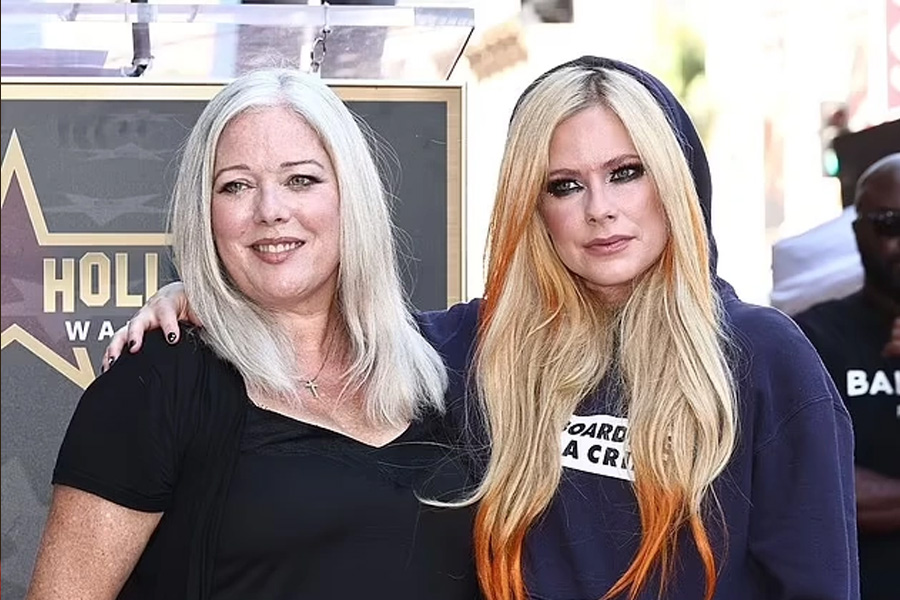
On August 31, 2022, she appeared alongside Avril at the singer’s Hollywood Walk of Fame ceremony in Los Angeles. The occasion symbolized a remarkable distance traveled from the Ontario family home where Avril’s musical ambitions first took shape.
In 2025, Judith-rosanne again appeared publicly with her daughter during Avril’s Greatest Hits Tour. Avril used the moment to acknowledge her parents’ encouragement and the sacrifices they made during her childhood.
These appearances offer a glimpse of their relationship without turning Judith-rosanne into a conventional celebrity. She remains most visible when her daughter’s career creates a reason for the family to stand together.
A Family Shaped by Music and Faith
The Lavigne household combined several influences that later became visible in Avril’s personality and music.
Faith provided the earliest musical setting. Country music introduced her to storytelling and live performance. Guitar opened the door to songwriting. Alternative rock and pop-punk eventually gave her a musical language that felt more personal.
Judith-rosanne’s contribution existed across all these stages. She was there before the records, before the tours, before the international recognition.
The family basement was not a recording studio in the modern professional sense. It was something more intimate: a place where a child could experiment without worrying about whether the world was listening.
That may be the most enduring part of Judith-rosanne Loshaw’s family story.
Career, Finances, and Public Life
Judith-rosanne has never had a significant public career like her daughter. She was mostly a stay-at-home mother during her children’s childhood.
An independent corporate empire, substantial professional honors, or a personal fortune are not reported. So be wary of celebrity website net worth estimates.
Her biggest contribution was family, not money. She raised three children, nurtured their interests, engaged in church life, and encouraged Avril during her musical development.
A Timeline of Judith-rosanne Loshaw and Her Family
| Year | Family event |
|---|---|
| 1955 | Judith-rosanne Loshaw is born in Ontario |
| 1975 | Marries Jean-Claude Joseph Lavigne in Belleville |
| 1983 | Son Matthew John Lavigne is born |
| 1984 | Daughter Avril Ramona Lavigne is born |
| Late 1980s or early 1990s | Daughter Michelle Anita Lavigne is born |
| Around 1989 to 1990 | Family moves to Napanee |
| Early 1990s | Avril develops as a church and local performer |
| 1999 | Avril performs with Shania Twain after winning a radio contest |
| 2002 | Let Go launches Avril’s international career |
| Around 2003 | Judith-rosanne and Jean-Claude divorce |
| 2003 | Judith-rosanne’s father John William Loshaw dies |
| 2017 | Her mother Ramona dies; Michelle marries Ryota Kohama |
| 2022 | Judith-rosanne attends Avril’s Hollywood Walk of Fame ceremony |
| 2025 | She appears onstage with Avril during the Greatest Hits era |
FAQ
Who is Judith-rosanne Loshaw?
Judith-rosanne Loshaw, also known as Judy Lavigne or Judy Loshaw, is a Canadian private individual best known as the mother of singer-songwriter Avril Lavigne.
When was Judith-rosanne Loshaw born?
Judith-rosanne Loshaw was born on February 17, 1955. Richmond Hill, Ontario, is commonly given as her birthplace, although some secondary records identify Belleville.
Who was Judith-rosanne Loshaw married to?
She married Jean-Claude Joseph Lavigne on February 1, 1975, in Belleville, Ontario. They later divorced around 2003.
How many children does Judith-rosanne Loshaw have?
Judith-rosanne and Jean-Claude Lavigne have three children: Matthew John Lavigne, Avril Ramona Lavigne, and Michelle Anita Lavigne.
What did Judith-rosanne do for a living?
She was primarily a homemaker and stay-at-home mother while raising her children. Her most visible contribution was supporting the family and encouraging her children’s interests.
How did Judith-rosanne support Avril Lavigne?
She supported Avril’s early singing, church performances, local appearances, and musical development. Together with Jean-Claude, she helped provide instruments and a home environment where Avril could practice and develop her abilities.
What were Avril Lavigne’s early musical influences?
Avril’s earliest influences included church music and country performers such as Shania Twain and Garth Brooks. As a teenager, she became increasingly influenced by alternative rock and pop-punk artists including Alanis Morissette, Blink-182, Green Day, the Goo Goo Dolls, Third Eye Blind, Oasis, and No Doubt.
Who are Judith-rosanne Loshaw’s grandchildren?
Her grandchildren include Jean-Michel Lavigne through her son Matthew and Ellanie through her daughter Michelle. The family keeps much of the younger generation’s personal information private.
Did Judith-rosanne Loshaw appear at Avril Lavigne’s Hollywood Walk of Fame ceremony?
Yes. Judith-rosanne appeared with Avril at her Hollywood Walk of Fame ceremony in Los Angeles on August 31, 2022.
Where did Avril Lavigne grow up?
Although she was born in Belleville, Avril spent much of her childhood in Napanee, Ontario, after the family moved there when she was young. Napanee became an important backdrop to her early musical development and public identity.