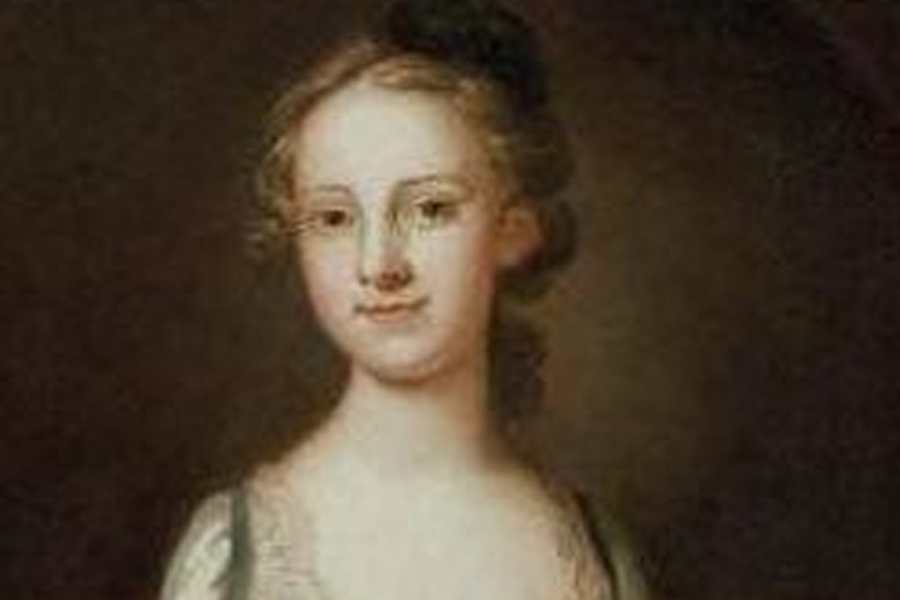
A Virginia life shaped by land, loss, and lineage
When I look at Frances Jones Dandridge, I see a woman standing at the root system of a remarkable American family. Her name may not ring as loudly as that of her daughter Martha Washington, but Frances was the kind of figure who held a family together like mortar between stones. She lived from August 6, 1710, to April 9, 1785, and her life moved through the long, restless world of colonial Virginia, where property, marriage, and bloodlines could shape an entire future.
Frances was born in New Kent County, Virginia, into a family with standing and connections. Her father was Orlando Jones, and her mother was Martha Macon Jones. That ancestry placed Frances within the early Virginia gentry, a world of plantations, inherited land, and social expectations that could feel as fixed as a courthouse column. She was not a public leader in the modern sense, but her life mattered in a deeper, more domestic way. She was a mother, a wife, a widow, and the center of a large family network that would stretch into the nation’s founding era.
Her parents and the household that shaped her
Frances’s father, Orlando Jones, was part of the colonial elite in Virginia. He died in 1719, when Frances was still a child. Her mother, Martha Macon Jones, also died early, leaving Frances in a household shaped by remarriage, guardianship, and family negotiation. That kind of childhood was not rare in the 18th century, but it mattered. It meant Frances grew up learning how fragile family structure could be, even among the privileged.
Her maternal ancestry linked her to the Macon family, another important colonial Virginia line. That connection is one reason Frances’s family tree is so tangled and so interesting. Around her were names that mattered in local Virginia society, and those names would keep echoing down the generations. I think of this period as a woven cloth: one thread alone does little, but together the threads form a durable pattern.
Frances also had a brother, Lane Jones. He was older than she was, and the two shared the same parents. In a family history sense, Lane matters because he helped define the Jones line. In a personal sense, he is a reminder that Frances did not emerge from nowhere. She came from a sibling network, a household, and a set of kinship ties that would shape her entire life.
Marriage to John Dandridge and the making of a household
On July 22, 1730, Frances married John Dandridge. This was a major turning point. John Dandridge was an English-born planter and local official, and their marriage joined two family lines into one working colonial household. Together they lived at Chestnut Grove, near Williamsburg, and built a family that would become historically significant far beyond their own century.
John Dandridge had his own social weight. He served as a clerk of New Kent County, held militia rank, and took on civic and parish responsibilities. He was not among the great national figures, but in the world of colonial Virginia, he was a man with standing, land, and influence. Frances’s life with him was anchored in plantation management, child-rearing, and the constant maintenance of a household that depended on land and enslaved labor.
Frances inherited land and enslaved people from her father, and that inheritance became part of the family economy after marriage. The record shows that the Dandridge household had property, labor, and obligation bound tightly together. It was a world of countable things: acres, children, servants, livestock, and debts. Yet beneath those numbers was a human rhythm of births, deaths, and daily survival.
The eight children who extended her legacy
Frances and John Dandridge had eight children, and this is where her influence becomes especially visible. Her children carried the family forward into new branches, new marriages, and new historical relevance.
Her eldest child was Martha Dandridge, born on June 2, 1731. Martha later became Martha Custis Washington and then Martha Washington, the first First Lady of the United States. That fact alone would make Frances historically notable, but it only begins the story.
The other children were John, William, Bartholomew, Anna Maria, Frances, Elizabeth, and Mary. Some died young, some built families of their own, and some entered the documentary record through marriage and property. Together, they formed a family cluster that spread across Virginia society like roots under a wide old tree.
John Dandridge, one of the sons, died young in 1749. William Dandridge later appears in family history connected to Chestnut Grove. Bartholomew Dandridge became a legal and civic figure, serving as clerk and judge. Anna Maria Dandridge married Burwell Bassett, tying the family to another prominent Virginia line. Frances, another daughter, died in childhood. Elizabeth Dandridge married Leonard Henley and became part of yet another branch. Mary also died young.
I find this pattern deeply human. Some children became known through marriage, some through office, some only through their brief time on earth. Frances’s life as a mother was not a side note. It was the central engine of her story.
Martha Washington and the family’s place in American memory
Frances’s most famous child, Martha, gives the family a national profile. Martha was born at Chestnut Grove and later married Daniel Parke Custis, becoming a wealthy widow after his death. In 1759, she married George Washington. Through Martha, Frances’s family entered the founding story of the United States.
But I do not think Frances should be reduced to “Martha Washington’s mother.” That title is true, but it is too narrow. Frances was the woman who helped raise Martha in a home shaped by inheritance, faith, plantation life, and colonial custom. Martha’s composure, domestic skill, and social intelligence did not appear by magic. They came from a world Frances helped create.
The family network also widened through Martha’s children and grandchildren from her first marriage. Her children included Daniel Custis, Frances Custis, John Parke Custis, and Martha Parke Custis. Through these descendants, Frances’s bloodline reached into the next generation of elite Virginia families. Family history is often less like a straight road and more like a river delta. Frances was at the source of one of those branching streams.
Anna Maria, Elizabeth, and the wider Dandridge web
Fanny Dandridge married Burwell Bassett. The Bassett family was another major Virginia family, and the marriage expanded the Dandridge network. Their descendants, including Frances Bassett Washington and Lear, continued the family name.
Elizabeth Dandridge Aylett Henley married Leonard Henley and had children. The Dandridge family expanded into new households, property, and kinship through Elizabeth. Women were more than names on paper. They were connected by inheritance, memory, and alliance.
Bartholomew Dandridge matters too. Only days after his mother died, he died in April 1785. He was a prominent son due to his legal and public service profession. He carried forth the family’s outward-facing aspect, while Frances represented the quieter interior structure that enabled it.
Widowhood, final years, and the closing years at Pamocra
After over 20 years, Frances became a widow when John Dandridge died in 1756. That moment altered her life. Widows in colonial Virginia had power if they had property and adult children, but widowhood also brought uncertainty. Frances relocated from the family estate to Pamocra, where she died in 1785.
In a year of family sorrow, she died on April 9, 1785. Bartholomew died that May. Mother and son died within days. That twin blow feels like finishing one era while beginning another.
I regard Frances’s later years as a protracted afterglow. The important task of her life was done. Children grew up. The family network moved. Through marriages and offspring, Dandridge spread. Her presence was quieter but still structural, like an old house’s beams after the builder left.
Family members at a glance
| Family member | Relationship to Frances Jones Dandridge | Notes |
|---|---|---|
| Orlando Jones | Father | Colonial Virginia planter |
| Martha Macon Jones | Mother | Died while Frances was still young |
| Lane Jones | Brother | Older brother |
| John Dandridge | Husband | Planter and county official |
| Martha Washington | Daughter | First First Lady of the United States |
| John Dandridge | Son | Died young |
| William Dandridge | Son | Connected to Chestnut Grove |
| Bartholomew Dandridge | Son | Lawyer and judge |
| Anna Maria Dandridge Bassett | Daughter | Married Burwell Bassett |
| Frances Dandridge | Daughter | Died in childhood |
| Elizabeth Dandridge Henley | Daughter | Married Leonard Henley |
| Mary Dandridge | Daughter | Died in childhood |
FAQ
Who was Frances Jones Dandridge?
Frances Jones Dandridge was an 18th century Virginia woman born in 1710 and remembered today chiefly as the mother of Martha Washington. She also stood at the center of a large colonial family with land, property, and important social ties.
Why is Frances Jones Dandridge important?
She is important because she was part of the family network that produced Martha Washington and other Virginia descendants. Her life helps explain the household, inheritance, and family structure behind one of the most famous women in early American history.
How many children did Frances Jones Dandridge have?
She had eight children: Martha, John, William, Bartholomew, Anna Maria, Frances, Elizabeth, and Mary.
Who was Frances Jones Dandridge married to?
She was married to John Dandridge on July 22, 1730. He was a planter and local official in Virginia.
What happened in Frances Jones Dandridge’s later life?
After her husband died in 1756, she became a widow and later lived at Pamocra. She died on April 9, 1785, in New Kent County, Virginia.