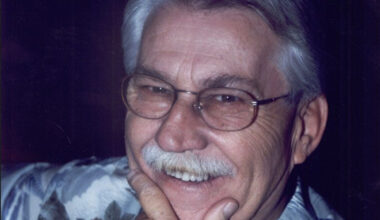
A life shaped by church, labor, and home
I think of Emile Jarreau as a man whose story moved like a steady river, not a flash of lightning. He was born on September 24, 1902, in New Orleans, Louisiana, and died on September 19, 1977, in Milwaukee, Wisconsin. In public memory, his name is often tied to the musical legacy of his son, Al Jarreau, yet Emile himself lived a more grounded life. He was a Seventh-day Adventist pastor, a church singer, and also a man who worked as a welder to support his household. That combination tells me a great deal. His world was part ministry, part labor, part family duty, and all of it held together by discipline.
Emile came from Louisiana Creole roots, which gives his story another layer of cultural depth. The old southern world he came from carried strong traditions of faith, music, and kinship. Those traditions did not disappear when he moved north. They traveled with him like seeds in a pocket, and in Milwaukee they took root in a new soil.
Marriage to Pearl Walker Jarreau
His marriage to Pearl Walker Jarreau was crucial to Emile Jarreau’s life. Pearl was born in Florida in 1903 and died 1962. The couple married in 1928, starting a large, close-knit brood. Pearl was more than a background spouse. She was a church pianist, spiritual partner, and household religious and musical leader.
Faith was not ornamental in Emile and Pearl’s home. It was daily life architecture. I image a house where the piano played, prayer ruled the day, and children learnt early that discipline and devotion go together. Such a dwelling can forge. It shapes character gently with heat and pressure until metal holds.
When the family moved to Milwaukee’s Halyard Park and Bronzeville neighborhoods, they became part of the religious and cultural fabric. The 1940 census lists Emile as a priest and vocalist and Pearl as a musician. That combination counts. Their lives seemed intertwined, one voice supporting the other.
The children of Emile Jarreau
Emile and Pearl are associated with six children, and the family line is important because it connects Emile to one of the most recognizable jazz voices of the 20th century. I find the children list especially revealing because it shows how broad the family influence was. This was not a small household with a single famous branch. It was a whole tree.
| Family Member | Relationship to Emile Jarreau | Notes |
|---|---|---|
| Pearl Walker Jarreau | Wife | Born 1903, died 1962, church pianist |
| Emile Alphonse Jarreau III | Son | Born 1929, died 2005 |
| Alpheus or Alphaeus Oliver Jarreau | Son | Often identified in family records |
| Joyce Pearl Jarreau Caldwell | Daughter | Family records identify her as a daughter |
| Rose Marie Jarreau Freeman | Daughter | Appears in memorial and obituary records |
| Alwin Lopez Jarreau, known as Al Jarreau | Son | Famous singer, born 1940, died 2017 |
| Marshall Alfred Laverne Jarreau | Son | Identified in family memorial records |
| Ryan Jarreau | Grandson | Son of Al Jarreau |
Emile Alphonse Jarreau III appears in the family line as one of the sons. He is part of the generational chain that keeps the Jarreau name visible in records and memorials. Joyce Pearl Jarreau Caldwell and Rose Marie Jarreau Freeman show that the family story was not carried by sons alone. Daughters were also part of the household legacy, and in family histories they remain named, remembered, and connected.
Then there is Al Jarreau, the son who became the most publicly famous member of the family. He was born in 1940 and became known around the world for a voice that could bend like light through glass. He won ten Grammy Awards and moved between jazz, pop, and soul with rare fluidity. I see his talent as part gift, part inheritance, and part the result of being raised in a home where music was as ordinary as breathing. Emile and Pearl created the room in which that voice could grow.
Another important family member is Ryan Jarreau, Al Jarreau’s son and Emile’s grandson. That means the family story continued beyond fame and beyond the father generation. It moved forward, one branch after another, like a melody that refuses to end on the final note.
Work, faith, and the shape of ordinary achievement
Emile Jarreau did not leave behind a celebrity career in the public record. Instead, his life reflects a different kind of achievement, the kind that often gets overlooked because it is lived at home, in church, and in the daily grind of survival. He was an ordained pastor, a church singer, and a welder. That last detail matters because it tells me he carried the practical burden of family life as well as the spiritual one.
A welder works with fire, pressure, and precision. A pastor works with words, conviction, and trust. A singer works with breath, timing, and feeling. Emile seems to have lived in all three worlds at once. That is a rare blend. It suggests a man who understood both structure and spirit, both labor and lift.
His financial story is not documented in a detailed way in public records, at least not in the materials I am drawing from. I do not see evidence of wealth or public prosperity. Instead, I see a man whose income likely came from a mix of church service and skilled trade work. That kind of life does not always produce headlines, but it often produces durable families.
The family atmosphere that shaped Al Jarreau
I see more than names and dates in Emile Jarreau’s household. See a cultural engine. Family discipline, church music, southern origins, and Milwaukee communal life fanned the fire. That environment undoubtedly shaped Al Jarreau. Children reared in homes where fathers sing in church and mothers play the piano learn early that music is not adornment. It’s language.
Emile Jarreau matters because of this. A star is not his only child. A celebrated voice’s concealed foundation includes him. Family history typically works this way. Hidden roots support the flower. Pearl, Emile were roots.
The household reflects migration and adaptability. Emile, from New Orleans, joined a Black Milwaukee community defined by faith, employment, and support. Moving from the Gulf South to the Midwest was more than geography. This was cultural transport. Traditions crossed states, settled in a new area, and sang.
Family profile at a glance
| Date | Event |
|---|---|
| 1902 | Emile Jarreau is born in New Orleans |
| 1903 | Pearl Walker is born |
| 1928 | Emile and Pearl marry |
| 1929 | Son Emile Alphonse Jarreau III is born |
| 1940 | Family appears in Milwaukee area records |
| 1940 | Al Jarreau is born |
| 1962 | Pearl Walker Jarreau dies |
| 1977 | Emile Jarreau dies in Milwaukee |
| 2017 | Al Jarreau dies, extending the family legacy into a new era |
FAQ
Who was Emile Jarreau?
Emile Jarreau was a New Orleans born family patriarch, Seventh-day Adventist pastor, church singer, and welder. He is best known as the father of Al Jarreau and the husband of Pearl Walker Jarreau.
Who was Emile Jarreau’s wife?
His wife was Pearl Walker Jarreau, born in 1903 and died in 1962. She was remembered as a church pianist and an important part of the family’s spiritual life.
How many children did Emile Jarreau have?
Public family records point to six children. They include Emile Alphonse Jarreau III, Alphaeus or Alpheus Oliver Jarreau, Joyce Pearl Jarreau Caldwell, Rose Marie Jarreau Freeman, Al Jarreau, and Marshall Alfred Laverne Jarreau.
Was Al Jarreau Emile Jarreau’s son?
Yes. Al Jarreau, born 1940, was Emile Jarreau’s son and later became an internationally known singer.
Did Emile Jarreau have grandchildren?
Yes. One publicly identified grandchild is Ryan Jarreau, the son of Al Jarreau.
What did Emile Jarreau do for work?
He worked as a pastor, church singer, and welder. His life combined ministry, music, and skilled labor.
Where was Emile Jarreau born and where did he die?
He was born in New Orleans, Louisiana, on September 24, 1902, and died in Milwaukee, Wisconsin, on September 19, 1977.