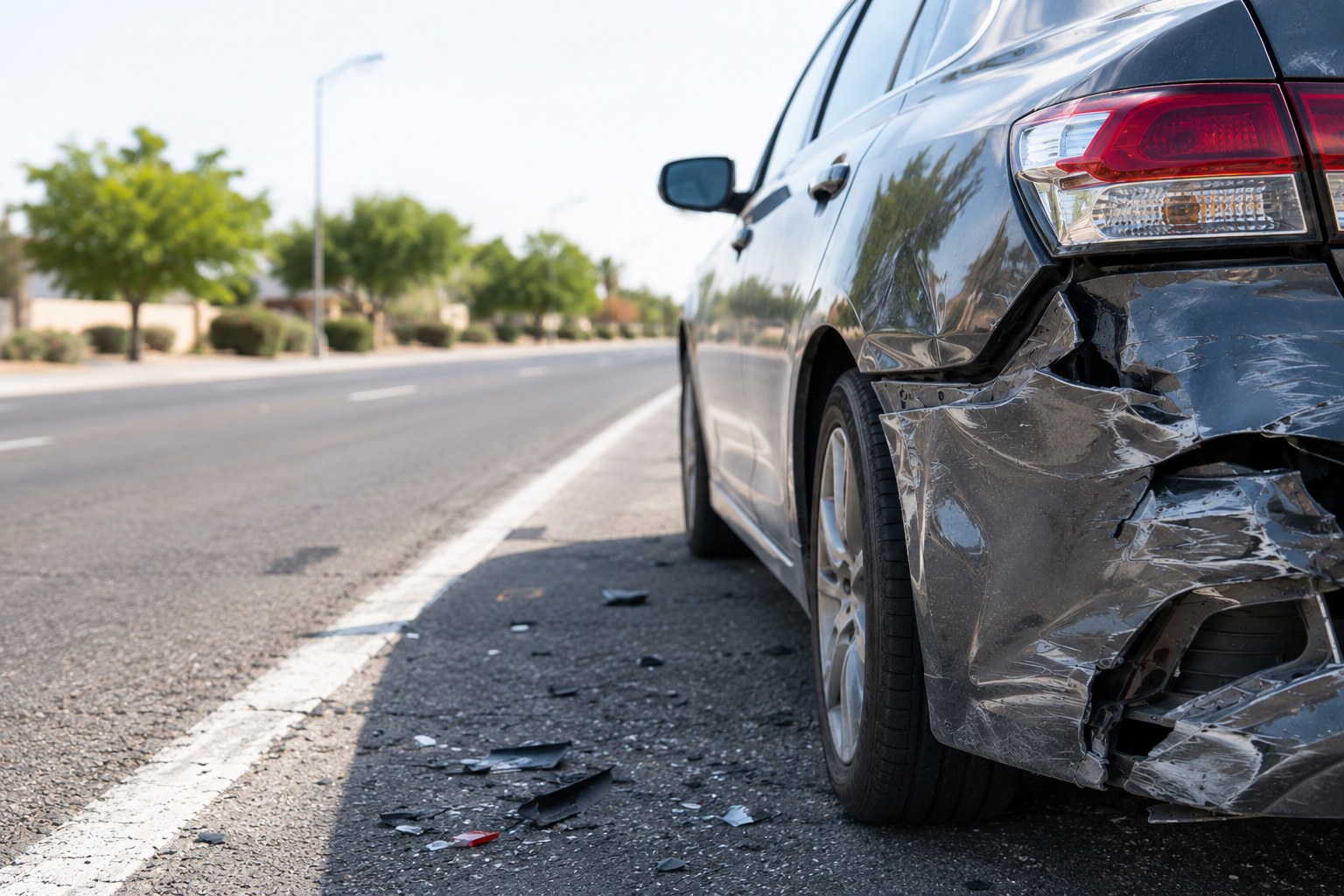
A hit-and-run can leave you dealing with repairs, medical expenses, and questions about your next insurance bill. In Arizona, there is no single outcome for every claim: the policy, the coverage used, the investigation, and the insurer’s underwriting rules all matter. A claim does not automatically mean your premium will rise, and a police report alone does not determine how an insurer assigns fault.
How fault and claim history can affect pricing
Insurers use their filed rating plans and underwriting rules when setting or renewing premiums. A claim that an investigation finds was not your fault may be treated differently from an at-fault loss, but the effect varies by carrier, policy, and other claims or rating factors. Ask the insurer how the incident is recorded, whether it is considered at fault, and how that classification could affect renewal. Your policy documents explain coverage and claims procedures; they may not promise a particular future premium.
Collision and uninsured motorist coverage
The coverage available depends on what happened and what the policy includes. Arizona requires insurers to offer uninsured and underinsured motorist coverage for bodily injury; a policyholder may reject it in writing. This coverage generally addresses injuries, not damage to your vehicle. Collision coverage may pay for damage to your own vehicle after a hit-and-run, subject to the policy terms and deductible.
- Collision coverage: May pay to repair or replace your vehicle after a covered collision regardless of who caused it. Your deductible and the policy’s terms apply.
- Uninsured motorist coverage: May cover bodily injuries to insured people when the at-fault driver is uninsured or cannot be identified, subject to the policy and applicable requirements. It generally does not pay for vehicle repairs.
Review the declarations page and policy wording to see which coverages and limits you selected. For vehicle damage, ask whether collision coverage applies; for injuries, ask whether an uninsured motorist claim may be available. Do not assume one coverage pays every type of loss.
What happens if you change insurers?
A prior claim may be considered during a new application or renewal, depending on the insurer’s rules and applicable requirements. Changing carriers does not guarantee that a claim will be ignored. Compare quotes using the same limits and deductibles, and ask each insurer how it treats a not-at-fault hit-and-run. Keep continuous coverage: a lapse can affect eligibility or pricing, depending on the company and circumstances.
Arizona duties after a crash
Arizona law requires drivers involved in crashes to stop and comply with duties that depend on the circumstances. A crash involving injury or death carries duties to provide information and reasonable assistance; leaving without complying can be a serious criminal offense. Separate rules apply to crashes involving vehicle damage. If you are the victim of a hit-and-run, report it promptly and provide accurate details, but understand that a report records the event and does not by itself prove fault or guarantee coverage.
| Claim circumstances | What to confirm |
| Other driver identified; you believe you were not at fault | How the insurer determines and records fault |
| Hit-and-run with bodily injuries | Whether uninsured motorist coverage applies and what notice or proof is required |
| Vehicle damage after a hit-and-run | Whether collision coverage applies and the deductible |
| More than one recent claim | How the insurer’s rating rules consider claim history |
These are questions to raise with your insurer, not predictions about a rate change. Pricing and coverage depend on the policy, claim facts, and applicable rating rules.
Steps to take after a hit-and-run
- Contact law enforcement and follow instructions for reporting the crash. Get the report or incident number when available.
- When safe, photograph vehicle damage, the scene, debris, and any visible identifying details.
- Write down witness names and contact information. If a nearby business may have video, ask promptly whether it can preserve the footage.
- Notify your insurer in accordance with your policy’s notice requirements and keep records of your communications.
- Ask which coverage is being considered, what documentation is needed, and how the deductible and claim classification work.
- Obtain repair estimates and keep receipts; coordinate inspection and repairs with the insurer as required by your policy.
A report and photographs can help document what happened, but coverage and fault decisions depend on the investigation and policy terms. Keep copies of estimates, medical records, and claim correspondence.
Deciding whether to file a claim
Before paying out of pocket or filing, compare the likely covered loss with the deductible and ask the insurer how the claim will be handled. If someone is injured, seek appropriate medical care and promptly notify the insurer. Do not assume that avoiding a claim will protect a future premium, or that filing will necessarily increase it. Check your declarations page for current limits and deductibles, and make coverage choices before a loss occurs.