Key Takeaways
- Commercial truck claims may involve additional records, insurance policies, and potentially responsible parties.
- Relevant records can include driver logs, dispatch communications, inspections, maintenance files, cargo paperwork, and electronic vehicle data.
- After a serious crash, prioritize medical care, clear documentation, and timely identification of evidence.
- Responsibility depends on the facts and may involve a driver, carrier, vehicle owner, maintenance provider, or cargo handler.
- Nevada deadlines may apply, while some evidence can be lost much sooner.
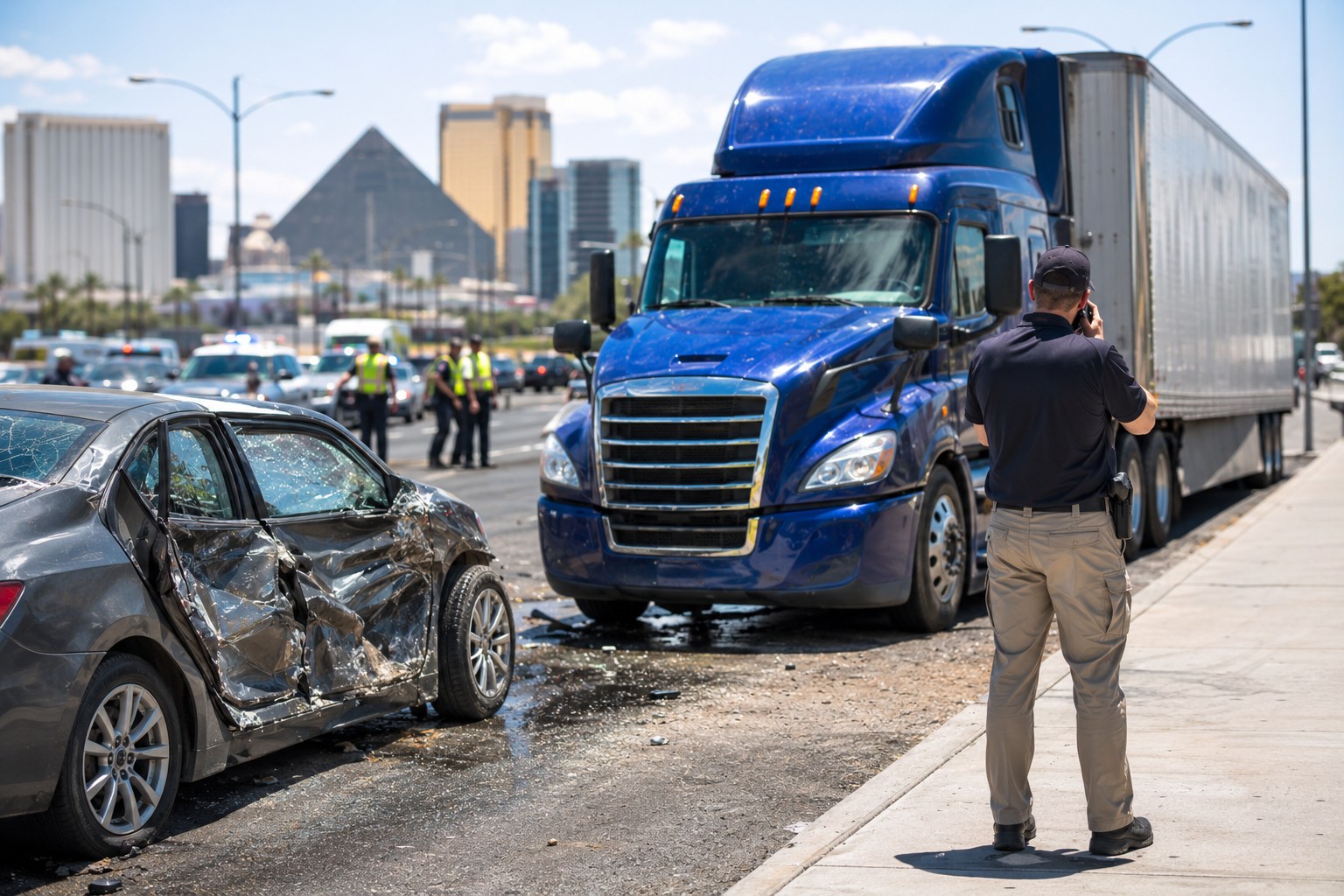
A commercial truck crash can happen on I-15, U.S. 95, the 215 Beltway, or other Las Vegas roads. The size and weight of a tractor-trailer, box truck, tanker, or delivery vehicle can cause serious damage and injuries that are not immediately obvious.
These crashes can require a broader investigation than a collision between two passenger cars. The driver, carrier, truck owner, cargo handler, and repair provider may hold different records about how the collision occurred.
Why Truck Claims Can Be More Complex
A commercial truck may be owned by one company and operated by another. A shipper or warehouse contractor may have loaded cargo, and an outside repair shop may have performed maintenance. These relationships can affect which evidence should be reviewed, but they do not by themselves prove responsibility.
For example, a tire failure may raise questions about inspection, maintenance, tire condition, and the circumstances of the crash. A rollover involving cargo may lead to questions about loading, weight distribution, or securement. The evidence determines whether those issues contributed.
Truck-Specific Evidence
Photos, witness accounts, and the police report remain valuable. Commercial-vehicle records that may be relevant include:
- The truck’s registration, carrier name, and identifying numbers.
- Inspection, maintenance, and repair records.
- Driver qualification, training, and duty-status records.
- Cargo manifests, loading records, and bills of lading.
- Dispatch instructions, delivery schedules, and communications.
- Dashcam footage, nearby surveillance video, and witness details.
Nearby video may be available around hotels, shopping areas, construction sites, loading docks, or intersections. Businesses and systems may retain recordings for limited periods, so identify potential sources promptly.
Electronic Records and Driver Hours
Depending on the truck and the circumstances, records may include location data, engine information, onboard video, and electronic logging device data. Many commercial drivers subject to hours-of-service recording requirements use electronic logging devices. Such records may help show driving time and rest periods, but they are only one part of an investigation and should be reviewed alongside physical evidence and witness accounts.
Motor carriers generally must retain electronic records of duty status and supporting documents for six months. This retention period makes prompt identification of relevant records useful when a crash is being investigated.
Who May Have Contributed?
An investigation may consider whether any of the following contributed to a collision:
- The driver, through speeding, distraction, fatigue, an unsafe lane change, or another driving action.
- The carrier, through hiring, supervision, training, dispatch, or maintenance practices.
- The truck owner or leasing company, depending on control and maintenance responsibilities.
- A cargo company or loading contractor, if cargo handling contributed.
- A maintenance provider, if a repair or inspection issue played a role.
- A manufacturer, if evidence points to a defective component.
A company name on a vehicle does not necessarily identify every relevant party. Legal responsibility requires a fact-specific review.
Medical Care and Injury Documentation
A truck crash can cause fractures, burns, brain or spinal injuries, soft-tissue damage, or internal trauma. Shock can make symptoms hard to assess at the scene. Medical evaluation supports health and creates a timely record of symptoms and recommended care.
Keep discharge instructions, test results, prescriptions, referrals, bills, and work restrictions. A dated record of pain, mobility, missed activities, or changes in work can help you and your medical team track recovery.
Insurance Issues
The driver, carrier, vehicle owner, contractor, or cargo business may have separate insurance. The policies and responsibilities depend on the arrangement. Keep claim numbers and copies of emails, letters, estimates, and settlement documents.
Before giving a recorded statement or signing a release, understand what is requested and what the document covers. Avoid guessing about speed, distance, prognosis, or fault before the facts are known. An early settlement may not account for future treatment, missed work, rehabilitation, vehicle damage, or other expenses.
Nevada Fault Rules and Filing Deadlines
Nevada follows a comparative-negligence rule. In general, a person’s recovery is not barred if their negligence is not greater than the negligence of the parties against whom recovery is sought; the statute also addresses allocation among multiple defendants. How the rule applies depends on the facts and the parties involved.
Nevada generally provides two years for an action seeking damages for personal injury or wrongful death caused by another’s wrongful act or neglect. Exceptions and other rules may apply, so verify the deadline for the specific claim with a qualified Nevada attorney. Evidence timelines differ from lawsuit deadlines: video may be overwritten, vehicles repaired, and some business records retained only for a limited period.
Steps to Take After a Crash
- Prioritize safety, call emergency services, and obtain medical attention.
- If it is safe, photograph the scene, damage, road conditions, truck markings, and cargo.
- Obtain the police report information and contact details for witnesses.
- Keep medical records, receipts, missed-work information, and insurer communications.
- Avoid guessing about fault or minimizing symptoms before the facts are known.
- Identify potential truck-specific records and recording sources promptly.
Commercial truck claims can involve more evidence, parties, and serious consequences than a typical car collision. After a Las Vegas crash, careful documentation can support recovery and help preserve information that may be difficult to obtain later.