A life rooted in work, music, and Midwestern grit
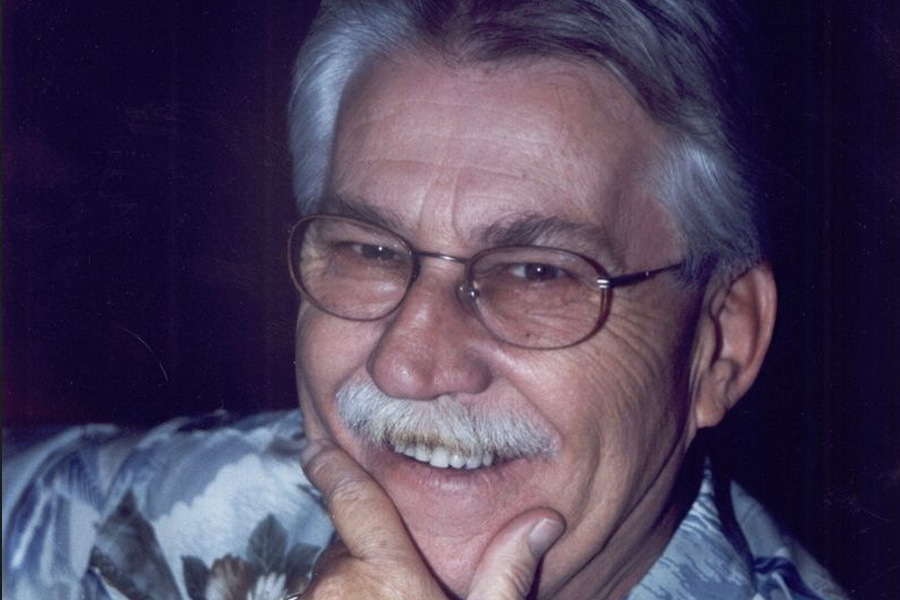
I see Donald William Simmons as the kind of person who shaped lives without demanding a spotlight. He was born on July 1, 1928, on a farm outside Berwick, Illinois, and his early years carried the stamp of rural labor, modest means, and steady discipline. He grew up on Union Hill, attended a one room schoolhouse with his sisters, and learned early that effort mattered. During the wartime years, he worked in town while still in high school, a detail that feels like a small lantern held up against a long road. He was not handed an easy path. He built one.
His education took him to Knox College, where music became not just a subject, but a calling. He worked summers on neighboring farms to pay for school, which says a great deal about his character. That is the image that stays with me: a young man balancing books, work, and ambition like a skilled juggler under a bright, impatient sky. At Knox, he met Patricia Kimble, later known widely as Pat Simmons, and the two were cast together in The Desert Song. That shared stage became the opening scene of a long marriage and a family story that would stretch across generations.
Music as a vocation, not a hobby
Donald William Simmons built his career around music education. He taught in public schools in Illinois and Michigan, directed church choirs, led community choruses, and worked with chamber chorales. His path was not limited to one classroom or one stage. It moved outward, like ripples from a stone dropped into water. He earned a doctorate from the University of Illinois, joined the music faculty at Ohio State University in 1963, and later moved to Missoula, Montana, where he chaired the Department of Music at the University of Montana in the early 1970s.
At the University of Montana, he was more than a professor. He became a builder of programs, standards, and musical culture. He later served as Associate Dean of the School of Fine Arts and retired in 1993, though retirement did not really mean stepping away. He continued teaching music appreciation well into his 80s and remained active in the life of the school. He also helped support the university’s Ice Cream Social tradition, a small but memorable sign that he understood community as something made from both serious work and cheerful rituals.
His achievements went beyond local recognition. He served as president of the Montana Music Educators Association and the Montana Choral Directors Association, and he worked on accreditation teams for the National Association of Schools of Music. Those roles suggest a man trusted not only for skill, but for judgment. In the world of higher education, that kind of trust is a quiet medal.
Patricia Kimble Simmons and the center of the family
Patricia Kimble Simmons was not a footnote in Donald’s life. She was a force in her own right, and together they formed a partnership with uncommon depth. Born in Chicago in 1929, Pat became a writer, arts organizer, civic leader, and longtime public figure in Missoula. She and Donald married on July 1, 1951, and their marriage lasted 61 years.
I think of them as two notes in a harmony that never frayed. One led in music education, the other in civic and cultural life, and together they gave their home a strong public pulse. Pat’s obituary shows a family life filled with arts, education, and service. She and Donald were not people who isolated themselves from the world. They entered it, helped shape it, and handed down a model of engagement to their children.
Their shared life also anchored a household where music, discipline, and public service were everyday languages. This was not a family that only admired culture from a distance. They lived inside it. They created it at the table, in rehearsal rooms, in classrooms, and in community gatherings.
The children: Elizabeth, J.K., and David
Donald and Pat had three children with artistic and intellectual traits.
Elizabeth Simmons-O’Neill taught community-based and literacy classes at the University of Washington. Her life reflects the family’s educational beliefs. Like nurturing a garden row by row, teaching that manner takes patience. It requires kindness, structure, and developing faith.
Through his acting career, J.K. Simmons became the most famous family member. Born in 1955, he became a successful performer in cinema, television, and theater. The family background matters. Donald’s musical instruction, Pat’s civic culture, and their family environment helped him develop the discipline and range needed for artistic accomplishment. J.K. Simmons became a father, and Donald became Joe and Olivia’s grandfather.
Born 1959, David Simmons studied music, education, and theater. He directly transmitted family art. His life connects his father’s scholastic music world to the family’s performance legacy. Niko, David’s son with Marilyn Rice, added to the Simmons family.
The wider family circle
His parents, Guy and Mamie Simmons, and sisters Ruth, Katie Jensen, and Ila Mae Simmons comprised Donald’s immediate family. His obituary shows that family was essential to him throughout his life. His life was shaped by his huge, working Midwestern family. His in-laws Dan and Reeva Kimble and Patricia’s parents Ruth Hazen and Ralph Archibald Kimble expanded that network.
A colorful picture is completed by the grandchildren. Elizabeth’s kids were Emma, Liam, and Zoe. JK Simmons had Olivia and Joe. David had Niko. A family like that is more than names. Each limb of this organic canopy carries light differently. Don’s legacy went beyond teaching and the classroom. His descendants carried on his legacy.
A simple table of the key family members
| Family Member | Relationship | Notes |
|---|---|---|
| Guy Simmons | Father | Donald’s father |
| Mamie Simmons | Mother | Donald’s mother |
| Ruth Simmons | Sister | Predeceased |
| Katie Jensen | Sister | Lived in Galesburg, Illinois |
| Ila Mae Simmons | Sister | Lived in Roseville, Illinois |
| Patricia Kimble Simmons | Wife | Married in 1951, arts and civic leader |
| Elizabeth Simmons-O’Neill | Daughter | Teacher at the University of Washington |
| John O’Neill | Son-in-law | Elizabeth’s husband |
| J.K. Simmons | Son | Actor Jonathan Kimble Simmons |
| Michelle Schumacher | Daughter-in-law | J.K. Simmons’s wife |
| David Simmons | Son | Musician, teacher, theater professional |
| Marilyn Rice | Daughter-in-law | David’s wife |
| Emma, Liam, Zoe | Grandchildren | Elizabeth’s children |
| Joe, Olivia | Grandchildren | J.K. Simmons’s children |
| Niko | Grandchild | David’s child |
Why Donald William Simmons still matters
Donald William Simmons matters because his life joined three things that often exist apart: hard work, education, and artistic discipline. He came from the farm, entered the academy, and kept one foot in community life throughout. He did not become famous in the usual sense. Instead, he helped produce, guide, and sustain excellence in others. That is a quieter form of legacy, but not a smaller one.
His death on July 9, 2012, closed one chapter, yet the shape of the family remains easy to trace. It shows up in music education, in theater, in university life, in community service, and in the names of grandchildren who carry the next layer forward. A life like his is not fireworks. It is a well tended fire, steady and useful, giving warmth long after the match is gone.
FAQ
Who was Donald William Simmons?
Donald William Simmons was an American music educator, university administrator, and family patriarch born in 1928 and known for his long teaching career, especially at the University of Montana.
Was Donald William Simmons connected to J.K. Simmons?
Yes. Donald William Simmons was J.K. Simmons’s father.
Who was Donald William Simmons married to?
He was married to Patricia Kimble Simmons, known as Pat, for 61 years.
How many children did Donald William Simmons have?
He had three children: Elizabeth Simmons-O’Neill, J.K. Simmons, and David Simmons.
What did Donald William Simmons do for a living?
He worked as a music teacher, choir director, professor, department chair, and associate dean. He also helped with music accreditation and professional music organizations.
What is one lasting sign of his legacy?
His legacy lives on through his children, grandchildren, and the Don Simmons Music Education Scholarship connected to the University of Montana.