A Multicultural Life Shaped by Voice and Memory
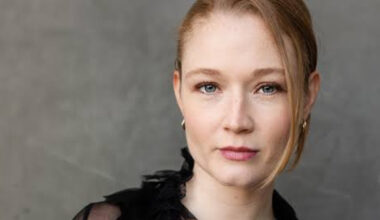
I see Rayanna Zaragoza as the kind of artist whose life feels braided together from many bright threads. She is not only a singer and songwriter, but also a storyteller, an activist, and a woman shaped by lineage, movement, and resolve. Born in New York City on April 16, 1993, she grew up in a world that was already layered with contrast. Her mother is Japanese, her father, Gregory Zaragoza, carries Mexican and Indigenous heritage, and that mix of cultures formed the ground under her feet from the beginning.
I find that kind of background important because it often produces a person who listens closely. Rayanna’s work seems to do exactly that. She listens to history, to family memory, to protest, and to the private weather of the heart. She then turns those things into songs that feel both intimate and wide open, like a window facing a long road. Her early life was spent between New York and Los Angeles, and that movement gave her both a sense of place and a sense of distance. She was close enough to tradition to feel it, but far enough away to question it.
Rayanna began performing young. She sang in school musicals and picked up guitar at age 12. By her late teens, songwriting had become more than a hobby. It was a way of naming the world. That matters, because many artists find their voice late, but Rayanna seems to have found hers by listening carefully to discomfort, identity, and beauty all at once. Her path was never a straight line. It moved like a river finding its bed.
Gregory Zaragoza and the Family Circle Around Rayanna
Rayanna Zaragoza’s family is central to understanding her. Her father, Gregory Zaragoza, is an actor and performer with a broad artistic life. He is described as having worked in acting and Broadway, and his presence suggests a household where performance was not foreign, but familiar. A father like that can shape a child’s understanding of stage presence, discipline, and the courage to stand in front of others and tell the truth.
Her mother is a Japanese immigrant, and even without a widely public name attached, her role in Rayanna’s life is unmistakable. She represents one half of the cultural bridge that Rayanna walks across in her art. Through her mother, Rayanna inherited a link to Japanese identity, migration, and the quiet strength that often comes from being between worlds. That kind of inheritance is not just personal, it becomes artistic. I can hear it in the way Rayanna approaches identity with both tenderness and tension.
Rayanna’s brother, Román Zaragoza, is also part of the family’s creative current. He is an actor and collaborator, and his work has intersected with hers in meaningful ways. The family connection between them feels especially alive because it is not simply a matter of shared blood. It is shared creative language. He helped with the video for her protest song “In The River,” which makes the sibling bond feel less like a footnote and more like a creative alliance.
Her sister, Danielle Zaragoza, is less publicly documented, but she remains part of the family structure that surrounds Rayanna. In families like this, even when one person becomes the most visible, the others still shape the room. Siblings are often the first audience, the first critics, and sometimes the first protectors. I think that matters here.
There is also a deeper ancestry story that helps explain Rayanna’s artistic urgency. Her great-grandmother was forcibly separated from her tribe and assimilated into white society. That kind of break leaves a mark that can stretch across generations. Rayanna appears to carry that history not as a burden alone, but as a source of purpose. Her songs often feel like acts of reclamation, as if she is gathering scattered pieces of identity and placing them back into a whole.
Career Growth, Public Recognition, and Artistic Independence
Independence, conviction, and refusing to be commodified have defined Rayanna Zaragoza’s career. She began with early releases and became known for folk music, activism, and emotional honesty. Heroine, her 2015 EP, defined her voice. She gained popularity in 2016 for her Indigenous resistance and environmental activist protest song “In The River”.
That song reveals Rayanna’s process. Art and life are one for her. She lets them clash. Her melody illuminates a bleak field. It illuminates the path but not the darkness.
The 2017 full-length album Fight For You deepened her political and personal topics. Woman in Color in 2020 garnered critical acclaim and highlighted her race, gender, and belonging insights. Hold That Spirit, her 2023 album, was about healing, feminism, and emotional regeneration. The term implies a hand on the heart, urging not to lose focus.
Rayanna has written and licensed songs for movie projects in addition to albums. She wrote music for Spirit Rangers, a children’s show. She has resisted early industry compromise and remained independent. Choice might be costly in the near term but useful in the long run. It keeps the artist’s shape.
As her financial situation is not publicly disclosed, I would not guess numbers. She presumably makes money via streaming, touring, licensing, publishing, and independent music. Awards, folk and music recognition, and a developing reputation as a conscientious, politically active performer are her accomplishments.
A Timeline That Tracks Growth and Transformation
Rayanna Zaragoza’s chronology appears more like doors expanding into greater rooms than a ladder.
In 1993, she was born in NYC.
Her scholastic years included singing and performance.
She started playing guitar at 12.
She traveled to Los Angeles as a youngster to explore her music.
Heroine began recording in 2015.
In 2016, “In The River” was a popular protest song.
The 2017 Fight For You broadened her reach.
Woman in Color advanced her critical status by 2020.
Hold That Spirit became more introspective and therapeutic in 2023.
She wrote for film and performed in other cultural areas around that release.
It demonstrates Rayanna’s career has always changed, making this chronology relevant. Each stage seems to reveal a new self. She moved, but not aimlessly. She moves deliberately.
Family as Compass, Art as Translation
What stands out to me most is how family and art mirror each other in Rayanna Zaragoza’s life. Her father’s performance background, her mother’s Japanese heritage, her siblings’ creative presence, and her ancestral history all seem to feed the same river. Her work translates those influences into songs that speak about identity, justice, grief, and self-possession.
Her family is not just a list of relatives. It is a living framework. Gregory Zaragoza stands as a central artistic figure. Her mother represents cultural inheritance and migration. Román Zaragoza shows the sibling bond made visible through collaboration. Danielle Zaragoza reminds us that family extends beyond the parts that become public. And the story of her great-grandmother adds a historical echo that gives her work its depth.
I think Rayanna’s importance comes from how she carries all of this without turning it into decoration. She does not wear identity like a costume. She builds with it. She sings with it. She stands inside it.
FAQ
Who is Rayanna Zaragoza?
Rayanna Zaragoza is an American singer-songwriter and activist artist known for music that blends folk, protest, identity, and personal storytelling. She is also associated with the name Raye Zaragoza.
Who are Rayanna Zaragoza’s family members?
Her family includes her father Gregory Zaragoza, her Japanese immigrant mother, her brother Román Zaragoza, and her sister Danielle Zaragoza. Her family background also includes an important Indigenous ancestral story through her great-grandmother.
What is Gregory Zaragoza known for?
Gregory Zaragoza is known as an actor and performer. He is also a major part of Rayanna Zaragoza’s family and artistic background, and his presence helped shape the creative environment around her.
What makes Rayanna Zaragoza’s music distinctive?
Her music is distinctive because it combines folk sounds, political awareness, Indigenous themes, feminism, and emotional honesty. I hear her songs as both personal and public, like a diary page held up to daylight.
What are Rayanna Zaragoza’s major career milestones?
Some major milestones include her 2015 EP Heroine, her 2016 protest song “In The River,” her 2017 album Fight For You, her 2020 album Woman in Color, and her 2023 album Hold That Spirit.
Does Rayanna Zaragoza work only as a musician?
No. She also writes for screen projects, contributes to children’s media, performs across artistic spaces, and has built a career that reaches beyond studio albums alone.
What is the significance of her family history?
Her family history is significant because it connects her to multiple cultures, artistic performance, and Indigenous ancestry. That background gives her music a sense of depth, as if every song is carrying a little more history than it first reveals.